
IT/OT Convergence: Benefits, Challenges, and What You Need to Know
Tak to usIntroduction
Almost a decade ago, enterprises across industries realized the need to converge traditional OT (Operational Technology) systems like assembly lines, machines and devices with the digital intelligence of IT (Information Technology) to boost agility and operational eciency and reduce costs. Today, the convergence of IT and OT has almost become inevitable, with 70-80% of industrial organizations already invested in connecting IT and OT systems as part of their cyber physical ecosystem.
While IT encompasses creating and managing enterprise apps and data, OT is about developing and managing physical equipment in the industry. Let’s understand the dierence between IT and OT to see how their convergence helps businesses.
Difference Between IT and OT
The objectives of IT and OT services are dierent. IT services focus on enhancing operations and automating repetitive, redundant work. Meanwhile, the OT helps manage, monitor, and control industrial services. Their security priorities are also dierent.
Regarding OT, availability is the main security priority, while confidentiality is the main priority for IT services.
Here are the other key differences:
Risk management goals
IT
Data confidentiality and integrity are important
Risk impact includes loss of data, delay of business operations
Recover by reboot
Example: Password lockout After three login failures, lock out all attempts for 10 minutes.
OT
HSE (Health, Safety, and Environment) and production are paramount (availability, reliability & availability)
The risk is the loss of life, equipment, or environment
Fault tolerance essential
Example: Easy and foolproof operator access If the operator is locked out due to wrong password input during a chlorine leak, the result would be disastrous
Differences in Availability
IT
Scheduled operations
Occasional failures tolerated
Rebooting tolerated
Beta testing in the field is acceptable
Modifications are possible with little paperwork
OT
Continuous operations
Outages intolerable
Rebooting may not be acceptable
Thorough QA testing is expected in a non
Formal certification may be required after any change
Cybersecurity Challenges of Converging IT and OT
Integrating IT and OT systems can lead to cybersecurity challenges requiring careful attention. You need to balance operational eciency with a robust security framework. For example, hospitals integrate IoMT (Internet of Medical Things) with patient records and AI analytics for remote monitoring. However, the industry also records 10% of ransomware victims. To avoid such cyber threats, here are the key issues and practical steps you can take:

Expanded Attack Surface
As your OT systems connect to IT networks and the internet, they become targets for threats like ransomware, malware, and remote exploitation. These systems were built decades ago without modern security features such as encryption or strong authentication.
Mitigation Steps
Segment your network using models like Purdue or VLANs to restrict access.
Adopt zero-trust security, treating every device and user as untrusted by default.
Perform regular vulnerability assessments & penetration testing on your IT/OT interfaces.
Legacy Systems and Unpatched Vulnerabilities
Older OT systems often run continuously, which makes applying patches challenging. This exposes you to exploits that take advantage of outdated software and protocols.
Visibility and Monitoring Gaps
Traditional IT security tools may not provide full insights into your OT environment, creating blind spots where threats can go undetected.
Mitigation Steps
Deploy OT-aware threat detection solutions that use behavioral analytics and anomaly detection.
Establish real-time threat intelligence sharing between your IT and OT teams.
Inconsistent Security Policies
IT and OT typically follow dierent security priorities. IT emphasizes confidentiality, integrity, and availability, while OT focuses on availability and integrity first. This misalignment can leave gaps in your overall security strategy.
Third-party and Remote Access Risks
Increasing remote access for maintenance and involving third-party vendors can introduce vulnerabilities if the connections aren’t secured properly.
Mitigation Steps
Use secure remote access solutions
and enforce strict vendor risk
management policies
Employ time-restricted credentials and bastion hosts for remote connections, with comprehensive logging and monitoring.
Pre-requisites for Converging IT and OT
To ensure secure and successful convergence of IT and OT, it is important to consider these key factors:

Cybersecurity Enhancements:
Improved threat detection and response help you safeguard IT and OT environments

Data-Driven Decision Making:
Utilizing AI, machine learning, and analytics empowers you to make informed, real-time decisions.

Regulatory Compliance:
Aligning with standards such as NIST and IEC 62443 and regional regulations like NCA OTCC and standards like DESC ICS, QCSF, NICS and ESIRF/ ERP ensures that your systems meet industry requirements

Cloud and Edge Computing:
These technologies enable ecient data processing and storage, ensuring your

Interoperability:
Adopting unified communication protocols like MQTT, OPC UA, and Modbus facilitates smooth and secure data exchange.

Benefits of Converging IT and OT
Enhanced Real-Time Visibility & Tracking
Live information from IoT sensors, RFID, and GPS monitoring provides information about inventory quantities, locations, and statuses (e.g., temperature and humidity). This allows you to keep track of your assets in real time. A global manufacturing company can combine its ERP and WMS with OT systems such as SCADA and PLCs to monitor raw materials in real time.
Doing this prevents overstock and stock out by enabling preemptive restocking. You can utilize RFID and IoT-based tracking and AI-based demand forecasting to maximize your inventory levels.

Benefits of Converging IT and OT
Automation & Smart Warehousing
Automated warehouses utilize robotics, Automated Guided Vehicles (AGVs), and IoT technology to automate storage and retrieval operations. This integration reduces human intervention and the possibility of human error. For example, smart warehouses, like those employed by big ecommerce businesses, can utilize real-time analytics to handle pick-ups, packaging, and shipping eciently.
Incorporate cybersecurity practices and establish duplicate network infrastructures to secure these automated systems against cyber-attacks and downtime.

Benefits of Converging IT and OT
Predictive Maintenance & Reduced Downtime
Converging IT and OT enables you to leverage OT sensor data (from IoT, SCADA, PLCs, and DCS) for real-time monitoring of equipment parameters like vibration, temperature, and pressure. Combined with IT-based analytics and AI/ML models, this data can trigger early warnings of equipment failure.
For instance, a logistics firm can apply this method to forecast forklift breakdowns before they cause warehouse operations to be disrupted or shut down and schedule preemptive maintenance.
Connecting a Computerized Maintenance Management System (CMMS) and rolling out AI-based predictive maintenance software allows you to establish automated notifications and real-time dashboards for your maintenance crews
Benefits of Converging IT and OT
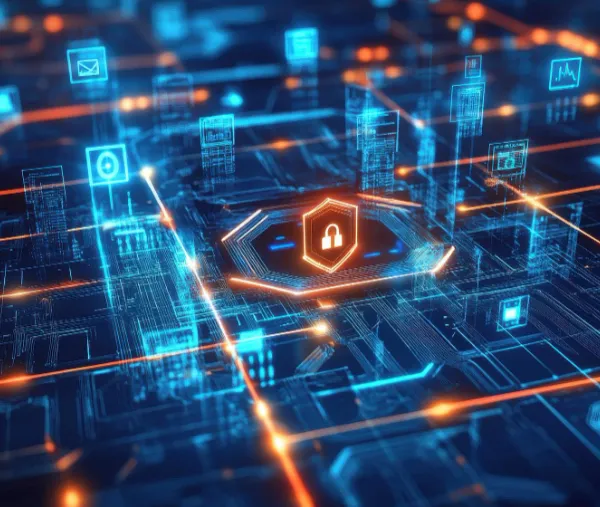
Improved Cybersecurity in Supply Chain Networks
As your IT and OT systems converge, supply chain networks may become more exposed to cyberattacks like ransomware or supply chain breaches. Strengthening your security posture becomes essential to safeguard sensitive data and operations. Zero Trust security models, network segmentation, and strict access controls can protect integrated systems from vulnerabilities and high-profile cyberattacks.
Adopting an OT-specific threat detection solution and Zero Trust security architecture can help you monitor and mitigate potential risks across your supply chain.
Secure Your Industrial Operations with Paramount
IT/OT convergence is a strategic imperative for securing industrial environments. Paramount Assure recognizes the urgency of building resilient OT systems by unifying IT cybersecurity frameworks with OT’s operational control. Our approach goes beyond standard defenses, focusing on:
Bridging the gap between IT and OT teams to build shared threat models and protocols.
Implementing controls specific to OT environments, such as network segmentation, zero-trust policies, and real-time threat detection.
Aligning with global standards to ensure audit readiness and regulatory adherence.
Organizations looking to fortify their critical infrastructure can rely on Paramount to guide their IT/OT convergence journey to ensure operational eciency and long-term security resilience.
Click here: https://paramountassure.com/contact-us/ to learn how Paramount can help bridge the IT-OT security gap for your organization