
Blog
Protecting Patients in the Digital Age: Why Cybersecurity Must Become the Heart of Healthcare
Why Cybersecurity Must Become the Heart of Healthcare
When I speak with healthcare leaders today, whether in boardrooms, government meetings, or at summits across the region, I sense a profound shift in awareness. Hospitals are no longer debating whether digital transformation is essential; they are now asking how to protect it.
Healthcare has always been about people. Every doctor, nurse, technician, administrator, and support staff member works toward one purpose: keeping patients safe. But nowadays, safety is not only physical. It is also digital. A patient’s well-being now depends as much on secure systems as it does on skilled hands.

And rightly so.
Because behind every digital innovation in healthcare, every AI tool, every MRI scan, every connected device, is a human life depending on it.
This is the reality that motivates me every day, and it is why cybersecurity must now sit at the very heart of modern healthcare.
Digital Healthcare Runs on Trust
Patients walk into hospitals expecting safety, honesty, and dignity. Today, that expectation extends into the digital world. Hospitals store sensitive information, run tests on connected machines, and use AI tools to support diagnosis and treatment.
This means the trust patients place in doctors and nurses must also extend to the systems running behind them.
If a scan is changed, a record is stolen, or a diagnosis is delayed because a system is down, the impact is not “technical.” It is personal. It affects real people, real families, and real outcomes.
According to a report by Kroll, in 2024, healthcare was the most frequently breached sector, accounting for 23% of all data breaches, up from 18% in 2023.
Why Cybersecurity Is Now Part of Everyday Care
Many people still see cybersecurity as something that belongs to the IT department. But in healthcare, everything is connected. Medical machines run on networks, records move between systems, images travel from devices to PACS, AI tools learn from patient data, and Cloud platforms support daily operations.
If any link breaks, care gets disrupted.
Think of the MRI process. It looks simple from the outside: the patient enters, the scan is done, and the results are reviewed. But behind the scenes, many digital steps are involved: the machine, the software, the image transfer, the storage, and the analysis. If even one point is weak, the final diagnosis can be at risk.
This is why cybersecurity is not just about protecting data. It is about protecting care.
AI Brings Big Possibilities(& Big Responsibilities)
AI will reshape healthcare. Faster readings, better predictions, and smoother operations, all of which can help save time and lives. But AI also brings new points of risk because it depends on constant data movement and complex decision-making.
AI needs strong guidance, clear rules, and responsible oversight. Hospitals cannot rely only on what vendors promise. They must ask:
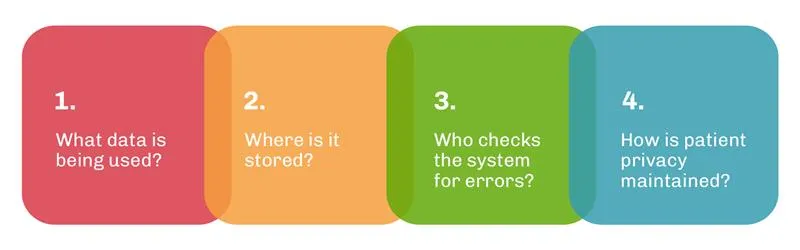
AI works best when it is built on strong foundations. Without that, the same technology meant to help can become a weak point.
Before Building Advanced Systems, Fix the Basics
Many hospitals are excited about new tools and digital upgrades. But simple gaps are still common: access control that is too loose, networks that are too open, data stored without enough visibility, and cloud rules that are not fully followed.
These issues may seem small, but they are the entry points attackers look for.
Getting the basics right is not a technical task alone, it is a sign of discipline. Strong foundations allow hospitals to grow safely without carrying hidden risks.
Security Must Be Part of Planning, Not Repair Work
Cyber incidents do not wait for a convenient time. They appear suddenly, without warning, and can stop operations within minutes. By the time a breach is discovered, the damage is often already done.
This is why early action matters. It is far better to prepare than to repair.
This reminds me of a story from Wimbledon that makes this point clear. After the SARS outbreak, Wimbledon paid for pandemic insurance every year. Many thought it was unnecessary. But when COVID-19 arrived, that insurance saved them millions. That was not luck, it was planning.
Cybersecurity works the same way, like a risk insurance. Hospitals must prepare before the crisis, not after.
Zero Trust Works Because It Reduces Guesswork
Zero Trust may sound like a heavy term, but its idea is simple: No one gets automatic access. Every request is checked.
In a busy hospital, this approach helps in three practical ways:
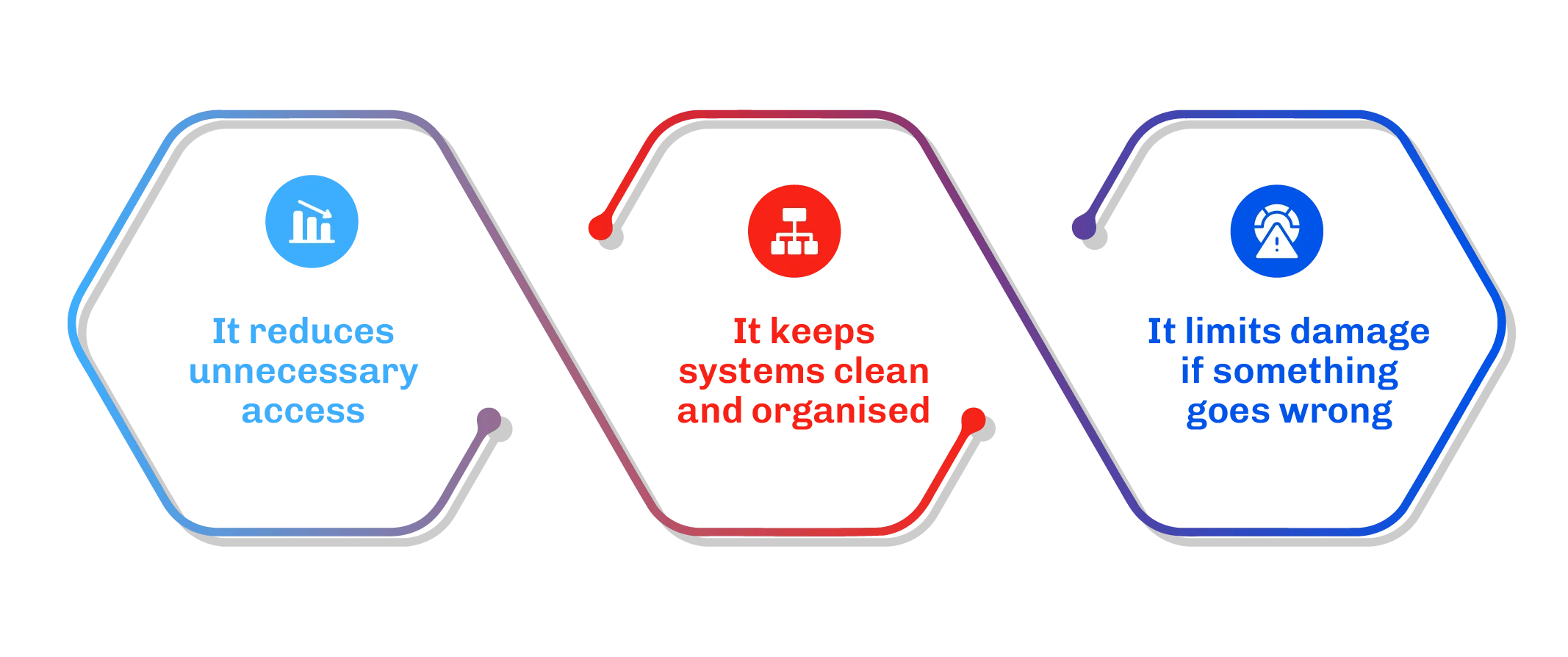
Doctors still get what they need, quickly and without trouble, but only the parts that are relevant to their work. This keeps care fast and safe at the same time.
AI-Powered Attacks Need AI-Powered Defence
Cyberattacks today move too quickly for humans to respond alone. Attackers use automated tools, and they work at machine speed. To keep up, hospitals also need defence systems that can think, learn, and act fast, powered by AI.
This is not about replacing people. It is about giving teams the tools they need to stay ahead. At Paramount, this is why we build solutions that combine human judgement with AI-driven defence. Prepared teams stay calm. Prepared systems stay strong. Prepared hospitals stay trusted.
The Real Purpose: Protecting the Patient
In the end, cybersecurity is not about software, dashboards, or devices. It is about protecting the person lying in the hospital bed, waiting for treatment.
When systems are secure, care continues without delay. When data is protected, patients feel respected. When hospitals stay strong, communities stay safe.
Digital protection is now part of the healthcare promise, just like clinical care, emergency care, and patient care.
Final Thought
Healthcare in the Middle East is moving forward at an impressive pace. But progress without protection is a risk we cannot afford.
My message is simple:
Protect the patient. Protect the data. Protect the system. This is not a technical task. It is part of modern healthcare itself.
And it must sit at the heart of every hospital that wants to keep its patients safe in the digital age.
ABOUT AUTHOR

By Premchand Kurup, CEO – Paramount

Premchand Kurup is the Chief Executive Officer at Paramount With over 30 years of leadership experience, Kurup has spearheaded the company’s operations across the Middle East, including UAE, Bahrain, Kuwait, Qatar, Oman, and Saudi Arabia.
Premchand Kurup is a visionary leader who pioneered cybersecurity in the Middle East and has been instrumental in positioning Paramount as an industry leader throughout the region. His strong focus on cybersecurity has contributed to the establishment of a robust sector in the Middle East as well as cemented his reputation as a
forward-thinking innovator.
Recent Posts
- 10 Tips to examine while developing Cybersecurity Awareness Program
- How to Detect and Prevent Deepfake Attacks in Cybersecurity
- How to Choose the Right Cybersecurity Solution for Your Business in Middle East
- Ransomware attack on Chinese bank’s US subsidiary another warning signal
- Spot & Stop Phishing

Protect your online assets from cyber threats with Paramount
Comprehensive cyber security solutions for individuals and businesses
Significantly reduce the risk of cyber threats and ensure a safer digital environment.